Showing posts with label food. Show all posts

Wednesday, 26 July 2017

Adventures in Natural Dyeing

With heavy hearts the children waved goodbye to their British grandparents last week. We see them regularly and they were with us for two weeks but it is never enough for the children. We all really needed a pick me up so we got in the car and made our way to the lovely Tisserie at Branderion, a small but delightful little museum concerned with fibre, textiles and weaving. 

Homeschooling Fibre, weaving, spinning, knitting
All the different animals who provide us with fiber
Homeschooling fibres and textiles
Really fun guess the animal fibre baskets

I'd signed the children and I up for a natural dyeing workshop and we weren't disappointed. Not only was the welcome warm and the museum's exhibition interesting, the workshop itself delighted everyone. We were eight participants and we covered three forms of natural dye, cochineal (cochenille en français), indigo and leaves. 

For the first two we experimented with tie-dying using elastic bands and dye baths. 
 
Homeschooling : dyeing with cochineal
Noah and Maya watch the bugs leak their dye!

For the cochineal, the dried bugs were mixed with boiling water, vinegar and bicarbonate of soda before we placed material samples, one wool, one cotton in the dye bath and left them to soak until the end of the workshop. 

The indigo bath was already prepared. We took it in turns to dip in aprons which we'd contorted with elastic bands. The later batches initially displayed an acid green colour alongside the dark blue but this faded as the aprons dried. 


Homeschooling : dyeing with indigo
Noah dips his apron in the Indigo
Indigo dye bath
Maya's turn
Indigo dyeing with under 5s
And last but not least, Lotta

For the third technique we picked fresh leaves outside and then after placing the leaves under a thin piece of cotton, used a hammer to release their dye. The material was then placed in a special bath with a fixing agent. 

Homeschooling leaf dyeing
Take the leaves
Homeschooling natural dyes
Place the thing material over them
Homeschooling hammer dyeing
And hammer...

The children were really delighted with all the results especially the aprons. The leaf dying really surprised them and they are very eager to try this again at home with other leaves as well as flowers (I'll keep you posted!). 

Indigo tie-dyed apron
The big reveal to Noah's delight
Indigo tie-dyed aprons
Apron's drying


Saturday, 8 July 2017

Five Little Things : Bounty

There's a lot coming in from the garden at the moment. Added to that we made time to get to the Pick Your Own farm this week and came home with just over 4kilos of strawberries. Like all the end of the year parties (pottery, climbing, riding etc) it's kept us busy and away from other things but it is so good to revel in the best of what the season has to offer. Strawberries simmering....


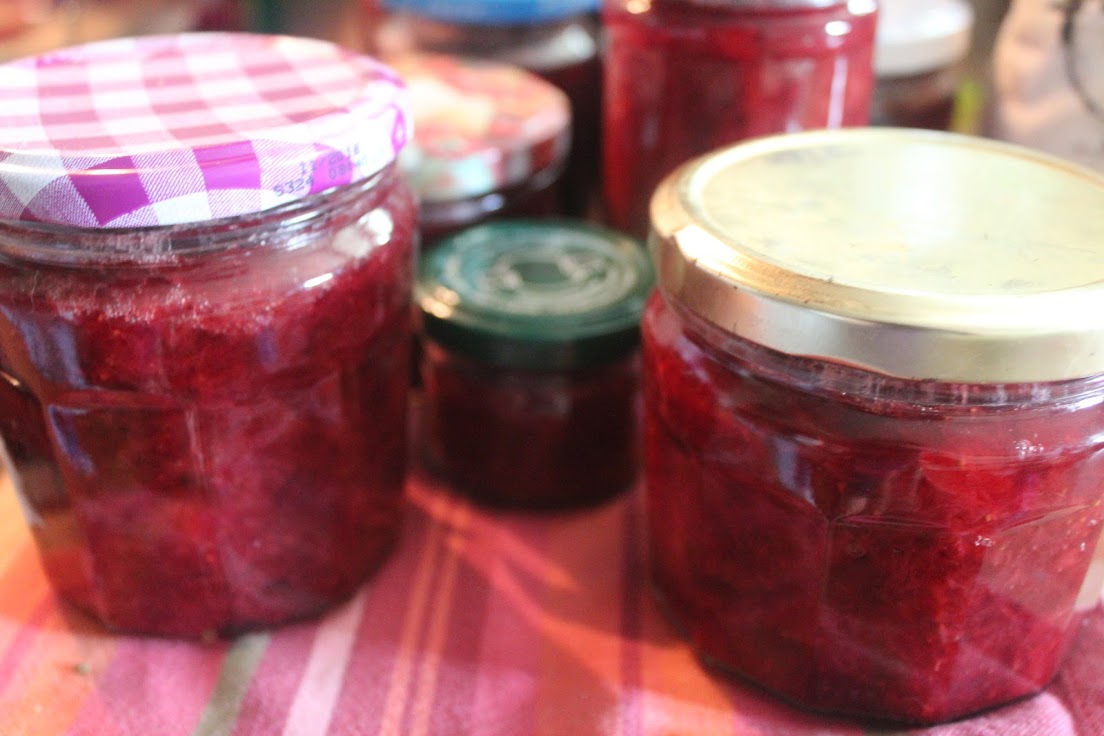
An immensely satisfying stack of jars filled up with homemade strawberry jam...


For the jam, I followed two recipes from the wonderful Canning for a New Generation, the simply diving Strawberry Preserves and my personal favourite the Strawberry and Lavender Jam, with lavender from our own garden. 

Of course the kids wanted to enjoy some of the strawberries other than in jam so we saved enough for a yummy Charlotte... (apologies for the terrible quality of this picture, three hungry beggars did not want to wait!)...


And as if all this strawberry goodness wasn't enough, Maya made us this beautiful salad with home grown Rocket and Borage, a delicious edible flower that brings a lot of bees into the garden promoting pollination across our veggie patch....

Rocket and Borage Salad

It seems to me that really relishing the food each season has to offer us is one of the most important ways we honour nature and fill our children with passion and awe for the wonder that is our planet and how it provides for all living things. 

Wednesday, 24 May 2017

My Top Twelve Tips for Cooking with Children

Lotta getting ready to cook
I've written before about experimenting in the kitchen with kids through baking, it's something we do a lot. Today I'd like to say a bit more about other kinds of cooking with our children. Firstly I should mention that I think helping your children learn to cook is a real gift parents can give them. I think it's a life skill that's up there with reading and writing and self-care. We hear a lot in the media about the importance of healthy eating and that is made much easier if you know a bit about ingredients and how to cook them. 

I remember when I first went to university, I'd never lived away from home before and I arrived with a good set of cooking utensils and plenty of recipes I'd been making regularly for quite a few years at home. In fact I'd often cooked for my family, up to three or four times a week. A lot of my fellow students however were not in the same boat. They were ill equipped both materially and in terms of the knowledge they had of food preparation. That translated to them mostly eating some form of ready made food from ready meals to jarred sauces etc. By Christmas of my first term I was regularly trading friends a home cooked meal for a couple of beers. 

Lotta (4) chopping

I would like to know that when my children leave home they know how to cook well. In fact I want them to know about every stage of the food process from growing seedlings to when to harvest and how to store and preserve excess. In that vein they've always been encouraged to help with cooking our meals. 

Now I have to be honest with you this isn't always fun. I would hate for anyone to read this and imagine this perfect situation where we cook together joyfully every time. In fact often the kids ask to help at the most inconvenient moments, usually when I'm in a big rush to get the food ready in time for us to go out. And don't let me get started on the mess they make! When they bake they are encouraged to clear up after themselves but often when they help with the cooking the clean up happens later and apart from clearing the table they're often not that involved. To give you a few examples, think carrot peel everywhere but in the composting bin, tomato juice dripping off the edge of the counter and down the drawers or soup or tomato sauce splattered all over the ceramic hobs. 

A very young Maya kneading dough

However, despite the inconveniences there are many advantages of involving them in our family's food preparation. Maya's pride when she made pasta for herself and her brother one day when I was sick in bed and her dad was really busy with other stuff. Lotta's sense of accomplishment when she helps mummy by chopping the vegetables. Noah deciding he'll give those courgettes a try after all because he helped cook them. And we do have a lot of fun, with the radio on, dancing and singing while we cook.

There's a lot of information available about cooking with children. Jamie Oliver's website for example has loads of features including advice and recipes. Here are a few of my ideas about cooking with kids.

Photo birthday food
A birthday spread the kids helped prepare

Top ten tips for cooking with kids   

I'd just like to mention that I have no formal culinary training. This a list of things I do with my kids. In our household all knife use by our younger children is always adult supervised as is any cooking around hot food be it on the hobs or in the oven. 
  • Provide a washable work space - table cloths are a no-no as are precious wooden counters or tabletops. Make sure wherever they're working will be easy to clean afterwards because they will make a mess. I've found a very large plastic mat to very useful. 
  • Make sure you have plenty of time. Kids can be very slow, rushing them will spoil the experience and might compromise safety.
  • When the above isn't possible delegate tasks that aren't as urgent. For example when one of my kids wants to do some chopping but I'm actually in a real rush with the savory food, I explain the situation and ask them if they'd like to chop up some fruit for desert instead. If that's not possible I set them up on a parallel board with a small amount of what I need. The important thing is not to turn them away, nothing kills there interest quicker. 
  • Give your non-readers a recipe with pictures instead of words they'll love the independence.
  • Explain what you're doing. Giving a running commentary on your own actions might feel a bit strange at first but it means any child helping you in the kitchen will be absorbing understanding of how cooking works.
  • Involve children in meal planning. Talk about what they like to eat and how you need to mix things up to get a balanced diet. Talk to your kids about what a balanced diet is, what we get from our food and how that helps our bodies. Tell them what's in the food they're preparing and eating at the time. 
  • Ask their opinion. If there are options in your meal talk to them about them, see if they want toasted nuts on their stir fry or to steam or sauté the vegetables. 
  • Teach safe knife use. Children are going to use knives if they're cooking and clearly we don't want any chopped fingers. My advice is firstly make sure the chopping board won't slip (you can put a damp tea towel under it for example). Secondly, demonstrate safe knife use - kids learn best by imitating so show them how it's done. More info from another mum here, I really like the playdo suggestion and it's certainly a way my kids have gained practice. And lastly, don't be tempted to use a dull knife, if they get cut it will be much worse and actually makes the whole job riskier because the blade won't cut smoothly and the child will have to use more pressure and may not maintain good grip and finger safety.*
  • An older child will really enjoy being in charge of a full meal. They'll feel a sense of accomplishment putting the food on the table. Help them with the planning and be available in case they need any help. 
  • As well as knife safety teach heat safety. From the beginning small children need to be aware that ovens and hobs are hot and can burn you. Especially nowadays with modern technology where there's no flame to see kids can get confused about how dangerous hobs are. They also won't necessarily know about heat conduction, that a pan will be hot if you touch it or that dishes that come out of the oven can burn your fingers. Older children as they get more independent will need to learn things like how to boil a kettle** and pour from it safely and how to be safe around boiling water. At each stage just remember that it's lack of experience which is children's biggest challenge and that as long as you provide the information they need and model safe behavior they should follow suit. 
  • If for whatever reasons you don't feel comfortable with your child using knives or hot things, or they're just too small (that really depends on your child) there are still loads of things they can do. It's great to start young so get them spinning salad, kneading bread or pizza dough, mixing pancake mix, arranging cut up food on plates, spreading things - anything that they can say I did that about really.
  • For home educators or parents wanting to stick in a bit of math practice measuring is great. Start out with cups and spoons, your kids will be able to familiarise themselves with notions like halves, quarters, thirds. Kids who are just beginning to read numbers will have a great time telling you when to stop as you measure out ingredients or doing it by themselves. If they don't know the number yet you can also show them it written down thus helping their recognition skills. And older kids can use addition when weighing ingredients and division or multiplication when recipes need sizing down or up.
*Although with the appropriate knife safety there should be very few accidents, things do happen and making sure everyone knows where the disinfectant, sterile wipes and plasters are as well as what to do if you cut yourself is a good idea. Similarly teaching your kids what to do if they burn themselves is good common sense. 

**Did you know making a cup of tea is one of the earlier brownies (like girl guides) badges! 

Wednesday, 18 January 2017

Letting our Kids experiment in the Kitchen

Whether it's play dough bake off, making the Christmas biscuits or a cake to take to pony club our children really enjoy baking and experimenting with it. At their science club yesterday they made pancakes. The principle was the following, give them one egg and tell them to beat it. Provide a vast array of flours, liquids, sugars and various other ingredients (cordial, hazlenut paste, food colouring...) let them explore adding different things to the eggs before cooking their mix and seeing whether it's edible*. 

As you can imagine they had a wonderful time. And its something they often ask to do at home too. Maya had a stage of following her own recipes. There were many flat cakes with the texture of pancakes as they often didn't rise as much as she planned. And there was a pastry phase where she made her pastry 'au pif' as the French say by just adding and mixing till she was happy. Sometimes this led to difficult to eat messes and other times to delicious discoveries like her cinnamon pastry base.

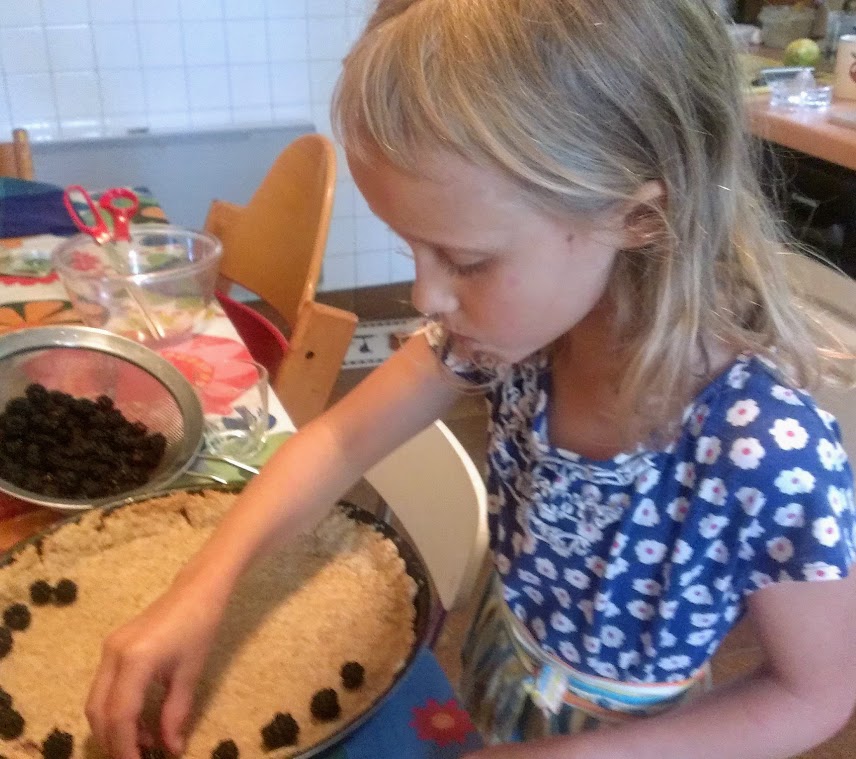
A younger Maya making a tart

I admit these experiments haven't always been my favourite moments. They tend to involve a lot of mess in the kitchen and the results aren't always that tasty. However, they give the children such joy in discovery and a sense of accomplishment when things do work that it's hard to resist saying yes. And they're learning through experimentation which is really positive. 

This is also an opportunity to learn something about how they are as learners. While our eldest needed to be left to it and allowed to experiment freely and with little or no constraint, our middle child always preferred having a recipe and a little leeway within that recipe. Perhaps this was due to tasting all his sister's pancake cakes or reflective of the fact he doesn't always like the unpredictable. 

Lotta's chocolate cake with grated butter

Our youngest daughter has just discovered the joy of her own recipes. She comes to me with a piece of paper on which she's written all the letters she knows and then proceeds to read me her recipe. She is not as independent as her older sister was, she likes me to be right next to her but she is definitely in charge. As I am able to influence quantities and make a few useful suggestions her cakes turn out pretty well on the whole. Sometimes we have to be inventive. With the above cake I realised part way through we hadn't put any butter in and that the cake was probably not going to be that great without it. So we grated it into the mix. It worked beautifully as did the crushed walnuts she decided to scatter through. 

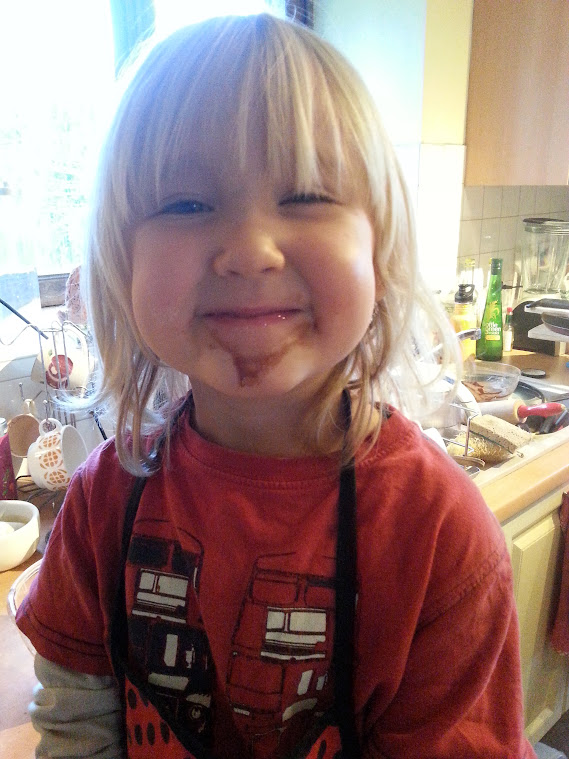
A happy Lotta eating some of her mix

They also change and evolve through this process. Once she could read, Maya was happy to follow recipes because she could still make the cake by herself. She still likes to invent new flavour combinations and decorations but she's decided if she wants a tasty cake it's probably best to at least use a recipe for guidelines.  

A few tips for baking with kids

  • If they're following their own recipe, let go of the expectation that the result will be beautiful or even tasty, it might be but there's no guarantee.
  • The first rule of baking in our kitchen is push up your sleeves, wash your hands and find an apron.
  • Using a stool to help your child be at the right height is a great help.
  • If they're are inventing their recipe, it's useful to begin by discussing what kind of cake your child wants to make. I find this helps them think through their recipe and helps me suggest what order they might like to mix things in. (I can also sneak a look at a recipe to have an idea of quantities)
  • In terms of quantities don't be too stingy unless you have very small baking pans. A small amount of mix in a too big tin makes for a very sad, flat little cake.
  • Be prepared to be as involved or not as the child wants. In our experience with Maya, our being too involved took all the fun out of it for her to the point she would abandon her cake.
  • If you're feeling especially organised, how about preparing an ingredients tray with everything they can use ready for them. You might want to put eggs, flour, milk, butter but also things like cocoa, chocolate or chocolate chips, banana (it helps with rising), baking powder and any other fun things you have to hand (cranberries, nuts, chocolate stars or hundreds and thousands).
  • For a child who prefers to use a recipe there can still be choice. For example, Noah loves making apple cake, one thing he can change is the size of the apples, and whether they're in chunks or slices. It doesn't seem like much but it changes how they look a lot.
  • Prepare yourself beforehand that even if they do help with the tidying up, you will probably end up doing a fair share of it. In our case, when they help with the washing up for example that usually means I end up having to clean the spillage all over the floor!        


* A handy tip from Tristan our science club leader. Pancake mix is great for experimentation because it doesn't need to rise. As long as you use egg as the base and some flour and some liquid, you are pretty much guaranteed the pancake will cook and be edible. How tasty is will be is variable however, some of the ones made with chickpea flour yesterday were not my favourites!