Showing posts with label parenting. Show all posts

Wednesday, 7 June 2017

The Power of Giving our Children a Foundation of Joyful Living

First of all an apology. I left for holidays in the Ardeche region of France with the intention of posting as normal here. Unfortunately the internet connection in our rural, hillside house wasn't up to the job at all. I couldn't upload a single photo or even really get blogger to load properly. It was frustrating though in fact the lack of a good internet connection did make for a very relaxing holiday and a really good rhythm to my days - early to bed and early to rise, yoga every day and lots of poetry reading. The light over the mountains facing our rental house was amazing and I also spent a lot of time out there with my camera getting some great flower shots and some amazing portraits (more of the flowers this weekend). 

Lotta rolling in delight

Time away from home is always different. It moves more slowly and is full of new experiences which renew and restore us as individuals and as a family. We were lucky to spend this trip with our extended French family - grandparents, uncles, aunties and cousins. For the children these kind of trips are magical. These are the halcyon days of childhood they will look back on throughout their lives with fondness and that sense of well being those of us lucky enough to have had a happy childhood carry everywhere with us. They made forts out of sticks, bows and arrows, paper hats and went in the swimming pool three times a day. There were horses and donkeys to befriend as well as getting reacquainted with the family. They were surrounded by happy, loving adults, ate well, played well and fell asleep exhausted as the sun set each day. Noah even fulfilled a lifelong dream to ride in a tractor thanks to the friendly neighbouring farmer.


Baling the hay - Noah gets a longed for tractor ride
Maya loving up the donkey

There is something about the carefreeness of childhood that most people consider sacred. We want our children to be free of worry, to live in the moment and enjoy these years because we know the burden of adulthood. We know what lies the other side of innocence in its most widest sense, the weight of carrying our problems on our own shoulders and also of the knowledge of all the bigger problems surrounding us. Of course children have their own concerns and problems, the business of growing up is a preoccupying and at times frighteningly difficult one. And few children live in a bubble outside of what's going on in the world around them. I did however take the choice during our trip not to share the news about Manchester and London with them. For me it cast a shadow over our holiday, over its lightness giving it a sense of other worldliness almost. I wanted my children to enjoy it unfettered. It doesn't mean I haven't talked to them about this now we're all back home, nor that in general I don't talk to them about current affairs. 

Noah using his bow
Louna and her arrows

Sometimes I think that in this world of suffering and pain, of terrorist attacks and insecurity it is even more important to ensure our children have a childhood, are allowed this magical time of play and lightheartedness. Why? Because it is these moments, these memories that will sustain them through any darkness and suffering they face. You know that memory, the one you can close your eyes and think of when times are very hard, when sad things happen, when the world seems such a terrible place? For me it's running through an arc of water, my friend Paul's hand in mine laughing and laughing and squealing with delight as my sister sprayed us with the hosepipe. Or the feeling of being snuggled into the belly of my Grandad's border collie Nellie her scratchy tongue licking my cheek. It's the memory of walking for hours round the garden of the house we now live in with my best friend Catherine talking and laughing about all the things we were going to do when we were very soon grown up.


These are the kinds of memories I'm interested in creating for my children as much as is humanly possible. Not just because I love them and I want them to have a happy childhood but because I also really believe, that a foundation of joy is the key to our most humane humanity. That it is from that full fountain we can give our best selves to the world, all our love and compassion, all our joy.

Wednesday, 24 May 2017

My Top Twelve Tips for Cooking with Children

Lotta getting ready to cook
I've written before about experimenting in the kitchen with kids through baking, it's something we do a lot. Today I'd like to say a bit more about other kinds of cooking with our children. Firstly I should mention that I think helping your children learn to cook is a real gift parents can give them. I think it's a life skill that's up there with reading and writing and self-care. We hear a lot in the media about the importance of healthy eating and that is made much easier if you know a bit about ingredients and how to cook them. 

I remember when I first went to university, I'd never lived away from home before and I arrived with a good set of cooking utensils and plenty of recipes I'd been making regularly for quite a few years at home. In fact I'd often cooked for my family, up to three or four times a week. A lot of my fellow students however were not in the same boat. They were ill equipped both materially and in terms of the knowledge they had of food preparation. That translated to them mostly eating some form of ready made food from ready meals to jarred sauces etc. By Christmas of my first term I was regularly trading friends a home cooked meal for a couple of beers. 

Lotta (4) chopping

I would like to know that when my children leave home they know how to cook well. In fact I want them to know about every stage of the food process from growing seedlings to when to harvest and how to store and preserve excess. In that vein they've always been encouraged to help with cooking our meals. 

Now I have to be honest with you this isn't always fun. I would hate for anyone to read this and imagine this perfect situation where we cook together joyfully every time. In fact often the kids ask to help at the most inconvenient moments, usually when I'm in a big rush to get the food ready in time for us to go out. And don't let me get started on the mess they make! When they bake they are encouraged to clear up after themselves but often when they help with the cooking the clean up happens later and apart from clearing the table they're often not that involved. To give you a few examples, think carrot peel everywhere but in the composting bin, tomato juice dripping off the edge of the counter and down the drawers or soup or tomato sauce splattered all over the ceramic hobs. 

A very young Maya kneading dough

However, despite the inconveniences there are many advantages of involving them in our family's food preparation. Maya's pride when she made pasta for herself and her brother one day when I was sick in bed and her dad was really busy with other stuff. Lotta's sense of accomplishment when she helps mummy by chopping the vegetables. Noah deciding he'll give those courgettes a try after all because he helped cook them. And we do have a lot of fun, with the radio on, dancing and singing while we cook.

There's a lot of information available about cooking with children. Jamie Oliver's website for example has loads of features including advice and recipes. Here are a few of my ideas about cooking with kids.

Photo birthday food
A birthday spread the kids helped prepare

Top ten tips for cooking with kids   

I'd just like to mention that I have no formal culinary training. This a list of things I do with my kids. In our household all knife use by our younger children is always adult supervised as is any cooking around hot food be it on the hobs or in the oven. 
  • Provide a washable work space - table cloths are a no-no as are precious wooden counters or tabletops. Make sure wherever they're working will be easy to clean afterwards because they will make a mess. I've found a very large plastic mat to very useful. 
  • Make sure you have plenty of time. Kids can be very slow, rushing them will spoil the experience and might compromise safety.
  • When the above isn't possible delegate tasks that aren't as urgent. For example when one of my kids wants to do some chopping but I'm actually in a real rush with the savory food, I explain the situation and ask them if they'd like to chop up some fruit for desert instead. If that's not possible I set them up on a parallel board with a small amount of what I need. The important thing is not to turn them away, nothing kills there interest quicker. 
  • Give your non-readers a recipe with pictures instead of words they'll love the independence.
  • Explain what you're doing. Giving a running commentary on your own actions might feel a bit strange at first but it means any child helping you in the kitchen will be absorbing understanding of how cooking works.
  • Involve children in meal planning. Talk about what they like to eat and how you need to mix things up to get a balanced diet. Talk to your kids about what a balanced diet is, what we get from our food and how that helps our bodies. Tell them what's in the food they're preparing and eating at the time. 
  • Ask their opinion. If there are options in your meal talk to them about them, see if they want toasted nuts on their stir fry or to steam or sauté the vegetables. 
  • Teach safe knife use. Children are going to use knives if they're cooking and clearly we don't want any chopped fingers. My advice is firstly make sure the chopping board won't slip (you can put a damp tea towel under it for example). Secondly, demonstrate safe knife use - kids learn best by imitating so show them how it's done. More info from another mum here, I really like the playdo suggestion and it's certainly a way my kids have gained practice. And lastly, don't be tempted to use a dull knife, if they get cut it will be much worse and actually makes the whole job riskier because the blade won't cut smoothly and the child will have to use more pressure and may not maintain good grip and finger safety.*
  • An older child will really enjoy being in charge of a full meal. They'll feel a sense of accomplishment putting the food on the table. Help them with the planning and be available in case they need any help. 
  • As well as knife safety teach heat safety. From the beginning small children need to be aware that ovens and hobs are hot and can burn you. Especially nowadays with modern technology where there's no flame to see kids can get confused about how dangerous hobs are. They also won't necessarily know about heat conduction, that a pan will be hot if you touch it or that dishes that come out of the oven can burn your fingers. Older children as they get more independent will need to learn things like how to boil a kettle** and pour from it safely and how to be safe around boiling water. At each stage just remember that it's lack of experience which is children's biggest challenge and that as long as you provide the information they need and model safe behavior they should follow suit. 
  • If for whatever reasons you don't feel comfortable with your child using knives or hot things, or they're just too small (that really depends on your child) there are still loads of things they can do. It's great to start young so get them spinning salad, kneading bread or pizza dough, mixing pancake mix, arranging cut up food on plates, spreading things - anything that they can say I did that about really.
  • For home educators or parents wanting to stick in a bit of math practice measuring is great. Start out with cups and spoons, your kids will be able to familiarise themselves with notions like halves, quarters, thirds. Kids who are just beginning to read numbers will have a great time telling you when to stop as you measure out ingredients or doing it by themselves. If they don't know the number yet you can also show them it written down thus helping their recognition skills. And older kids can use addition when weighing ingredients and division or multiplication when recipes need sizing down or up.
*Although with the appropriate knife safety there should be very few accidents, things do happen and making sure everyone knows where the disinfectant, sterile wipes and plasters are as well as what to do if you cut yourself is a good idea. Similarly teaching your kids what to do if they burn themselves is good common sense. 

**Did you know making a cup of tea is one of the earlier brownies (like girl guides) badges! 

Wednesday, 3 May 2017

Giving our children agency on their birthdays


Last week I wrote about sharing touchstones for joy with our children through sharing our passions. Another moment when we try, like all parents, to create happy memories for our kids is on their birthdays. We mark these special days with our own family traditions and by giving the day over to the birthday person, that is to say letting them choose the food we eat, the places we go, the activities we share. 

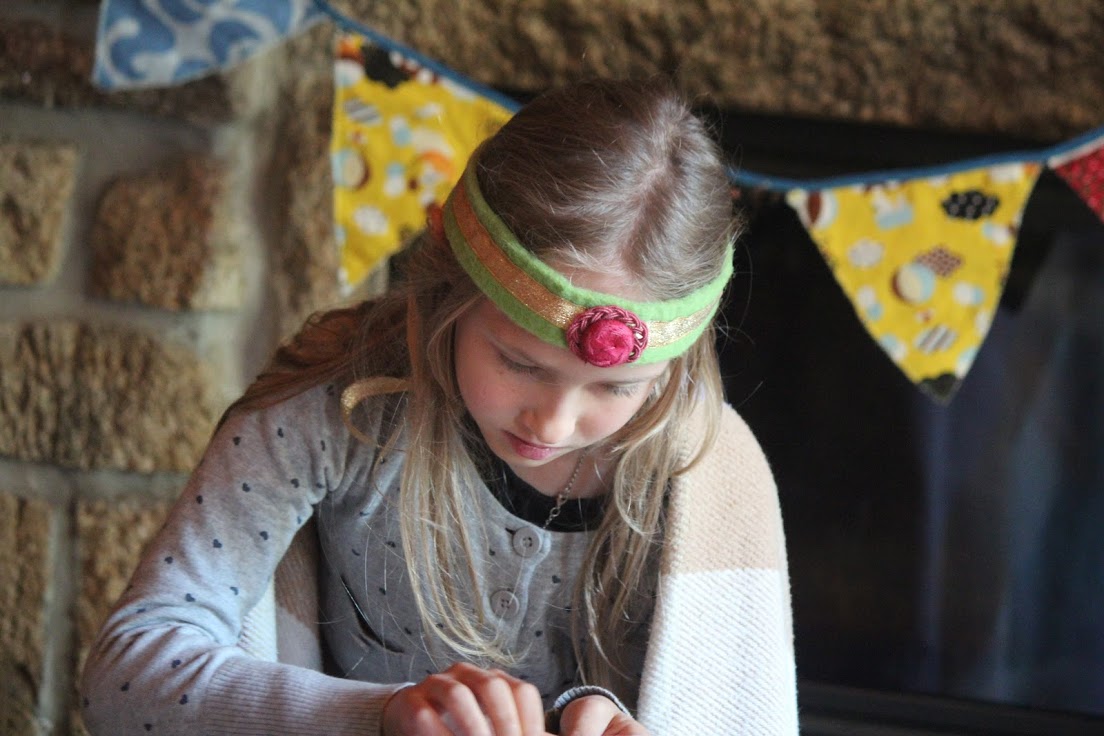
Maya wearing her crown

Our traditions are simple; bunting, a birthday crown, opening the presents one by one in the morning after breakfast (if it's possible to wait that long!), taking a moment to each say something we’re grateful for about the birthday boy or girl. In general birthdays are spent ‘en famille’ because this is what the children prefer. If they want a party then it’s held on another day.


Origami horse birthday decorations

When I look around I can see that our way of doing things is very simple compared to some of the enormous birthday celebrations going on out there. But whether a celebration is big or small, simple or elaborate is not the most important thing to me. What really counts is giving the birthday child agency. 


Noah chooses Lego and apple cake

Children live each day in a world where many decisions, big or small, are out of their hands. What time they have to get up, what they get to eat, where they have to go, all these things are decided for them. This is true for home educators as for school educators. Okay, we don't usually get up so early! But we do have places we have to be and it is Frank and I who plan our menus. Of course we try to include our children in these decisions as far as possible, to offer options and discuss how we do things. We try to include foods they like to eat and to talk about our activities and what they mean for how our time is organised. But its not the same as being fully able to decide how things go down, even if for only one day.

Lotta picks the beach and a big sister pony ride
 
In fact I think that giving our children agency over the big and small decisions for one day is a very special gift. I know that my three all really enjoy telling us in the weeks before their birthdays what the menus will be and what they'd like to do. It makes their day extraordinary and it is such a small thing for us to do.

Maya on her first birthday

This year, as she turned eleven, Maya wanted to be just us on her birthday. She had a small party two days earlier with a couple of friends one of whom slept over. We spent a lot of time making things for her party bags and decorations for the house using our origami skills and this book (in French). Aside from horses we also made cranes and origami flowers to put in the party bags along with homemade earrings (I made tiny cranes using a quarter of a square of origami and added some beads sorry no photos). There was also some chocolate and sweets in little origami bags (I'll post a tutorial for these soon as I couldn't find anything in English). 


Origami flower gift
Origami decorations

On the actual day she opted for crème budvig for breakfast, goat’s cheese salad followed by pavlova for lunch and pizza for tea. She wanted to stay home and enjoy the nice weather. We played molki in the garden and Mr X, one of her favourite board games, twice. In the evening we got her little brother and sister to bed and watched Rogue One. It was a simple, quiet day.


Maya 11


Wednesday, 26 April 2017

What we pass on to our children

Parents, whether they choose to home educate their children or send them to school, teach them so much day after day in the way they live their lives and the homes they create. They share their own passions with their children just by being with them, it might be a song, or a book or an interest in old maps, ancient ruins, cathedrals, manicuring your nails, gardening, old westerns... the list is endless. 


Lotta and me doing the tree

But listen to any interview or read any biography and almost every time people talk about the things their parents passed on to them, the things they taught them or the passions they shared with them. I wanted to write about that today because I think it's something beautiful and precious.

Maya the artist

We may not realise sometimes how significant the moments we share together may turn out to be. Little did I know as a small girl that watching my dad take photos would inspire me to love photography too. Or that being in the living room with him at the weekends when he played his records would give me a lifelong love of jazz. 

My dad with his camera

Today marks the 100th anniversary of Ella Fitzgerald's birth and as I've been listening to radio shows about this woman I've long admired, I was surprised how many of the songs were so familiar that I could sing along line for line. Even all these years later those impressions from childhood are incredibly strong.

Related image

Many people were interviewed about what they loved about the First Lady of Jazz's music and over and again people mentioned the word joy. And it hit me then, that when my dad shared this wonderful music with me, not only did he introduce me to jazz, to a beautiful voice and it's amazing scats, he also shared his joy with me and gave me a touchstone for that feeling throughout my life. 
I wonder sometimes which of my own passions I'll pass on to my children, I hope my love of words, I hope my enjoyment of the natural world, I hope some touchstones for joy.

Noah collecting shells

Wednesday, 13 July 2016

The homeschool files : Passionate about Ponies


As I've said before, one of the principles of our approach is following the children's interests. Home educated children have a lot of time to explore their passions if we let them. Both at home and out in the world, all the time they are not spending in school can be used to pursue their interests. In the case of our oldest Maya this means a lot of time is spent on horses and horse riding. 

Watching Maya's passion grow has been a joy. From her first tentative steps at age 4, she has grown to be very disciplined about this activity. She's also so enthusiastic it sometimes verges on being annoying, like when she asks you for the fiftieth time in how many minutes you'll be leaving for pony club! This is really her world, as none of the rest of us have any experience with our equine friends. Of course we've all learnt a lot from reading books and watching films and documentaries about horses but she is still our resident expert.


When your homeschool child finds something they love and pursues it outside of the home, as for parents who send their kids to school, it can sometimes be complicated to know how involved you should be. Maya's pony club is her world and as she's grown up a lot this last year she's needed us in it less and less. And although it's delighted us to see her have the confidence and responsibility to do this all by herself (well except for lifts - agh), it was sometimes hard not to know much about what was going on. 

So, it was with great curiosity and delight that we attended her club's annual party and barbecue last weekend and were admitted, if only for a day into her world. The opportunity to meet and speak with her teachers was great and we were happy to hear that she's a useful and much appreciated member of their community as well as a good rider. We were also able to put names to the faces of all her friends who share her passion for riding. 


As our children get older I expect we will be less and less involved with their learning process, but I hope and believe they'll always be these windows into their lives which let us share with them the progress they're making and the joy their finding in pursuing their passions. 


Wednesday, 18 May 2016

The Homeshcool Files : Tests

The hamac, ideal location for reading, chess and chilling out!

Testing has been in the media quite a lot in the UK recently with parents choosing to keep their children out of school, on 'strike' over the SATs. Parent's are complaining that their children's performance in such tests is more important to their teacher's and schools than their happiness and well-being and joy in learning. Although we live in France and are home educators it's a debate I've taken a keen interest in and that does have a relevance to what we do, why we do it and what I'd like to tell people about the choices we make. 
     
Firstly, I'd like to say that the amount of testing, homework and what I felt was too serious school work for small children was one of the first things that put me off schooling my eldest daughter. I would often look out the window at the kids walking home from the school down our street and feel saddened by the site of their little hunched over backs weighed down by such heavy backpacks. Somehow it seemed as if their wings were clipped. Choosing to home educate was a way to give our children freedom and keep them out of a system that to my mind places too much emphasis on the quantitative and not enough on the quality. I wanted a childhood for my kids full of adventures and imaginings and no testing. 
 
Maya running wild at the Beach

But even as homeschoolers we are not free of the threat of tests. In France as a family having chosen l'instruction en famille , we must declare our situation every year and the local Education Authority then carries out an inspection. Their duty is to verify that instruction is being given to our children and that it is adapted to their needs. There are no benchmarks that we have to meet except that we should have roughly covered the socle commun or national curriculum by the time they are 16. They are not supposed to compare our children's progress to children of similar age within schools. They do not need to test our children, but they'd like to. As school inspectors they are used to testing children and it is hard for them at first to understand how they can evaluate whether what we are doing with our children is effective without testing their level.

We refuse to allow any testing. In fact we have a golden rule that when the inspectors talk to the children they must only ask open ended questions. This may seem extreme but for us testing makes no sense within the educational philosophy we've adopted. We believe each person's learning path is unique and uniquely personal and therefore asking them to tell someone else what they knew, to provide restitution, is inherently intrusive. Home educated children we know simply cannot understand why an adult would ask them a question they clearly know the answer to? They are derouted by it and find it hard to answer because they think it's a trick. 

So why do schools have tests and why do the inspectors like them? They provide facts and figures which can then be used to provide data about how well or badly an institution (a school, lea or government) is doing. For me, particularly at primary school age they have little or nothing to do with the children. Even at a later stage, I find that at best tests are evidence of what an individual knows on a particular day in a particular place. Having sat many I can not so proudly say, I've forgotten an awful lot of it!
 
Noah admiring a bird he just decorated
But without testing, I know a lot of people wonder how we can be sure our children our learning and progressing? With no quizzes or even direct questions (as much as possible sometimes you can't help yourself), how can we be sure they're learning anything at all? The honest answer is that we don't know all the specifics of what they're learning. If you asked me right now what any one of the kids has retained from the numerous learning experiences we've had in the last week I probably couldn't give you that many concrete examples. However, what I can say without a doubt is that they are always, always progressing and that is true even when they have their most dormant, stationary periods of all. 
  
In fact often, those periods when they appear to be learning nothing and what's worse seem not very interested in learning anything at all are often followed by the most significant leaps in understanding of all. It seems the brain needs downtime to process what it's taking in - haven't we all experienced this as adults

What allows us to see their progression is what I like to call the slow reveal; over a long period of time we gradually see emerging all the things that interested them, that responded to questions they had and that they've retained and used to further their understanding of the world around them. These things emerge in conversation at the dinner table, when we encounter a subject again and something's clicked or when they ask another question to further their knowledge. It's a process that requires a lot of trust, trust in their ability to learn, to stay curious and ask questions and to find their own way to the knowledge they need. It can be a bit frightening but I am constantly amazed by my kids and how intelligent they are and this is enough to keep me on track.      

With our inspectors we have been lucky to meet open minded individuals. We explained our approach and our reasons for it and they accepted it. We took the time together to talk about our children, their interests and what they've been learning. We tried to meet them at least a little on their own ground by giving a qualitative account of our children's progress as we see it. Of course they are particularly interested in reading, writing and arithmetic but they were open to a discussion about how other activities help and encourage through necessity if nothing else, the acquisition of these essentials. They give suggestions about methods they know of they think might interest our kids or make suggestions about other activities they might find interesting. Although I can't say I like these inspections they force us to reflect seriously about what we're doing and give rise to some interesting conversation.

Our approach is a far cry from SATs and the like. People in favour of testing constantly insist they're necessary to target kids that need help but for me they only show you what wasn't working on a specific day at a specific time. Wouldn't a qualitative discussion between parents and teacher, between the people invested in the child's education be able to identify difficulties and devise strategies to help them more efficiently? If you spend time with a child, get to know them and how they learn, then you can learn how to help them, what to put in their path so they can learn what they need to. 

What I suppose I think about all the parent's feeling their kids are over tested is this : you are absolutely right. There are other alternatives but they all start first and foremost with having confidence in our children to educate themselves in what they need to know and confidence in ourselves as parents or teachers or facilitators to help them on their path. This is what we need to campaign for for all children whether home educated or school educated.


** I'd like to note that our eldest willingly puts herself into exam situations in her out of home activities - passing her belts at karate and her galops with pony. She spends a lot of time preparing for these tests and is keen to revise. For me the important thing here is that she is choosing to sit these exams because she wants to and feels she is ready to. We've made it clear to her that they are optional.